
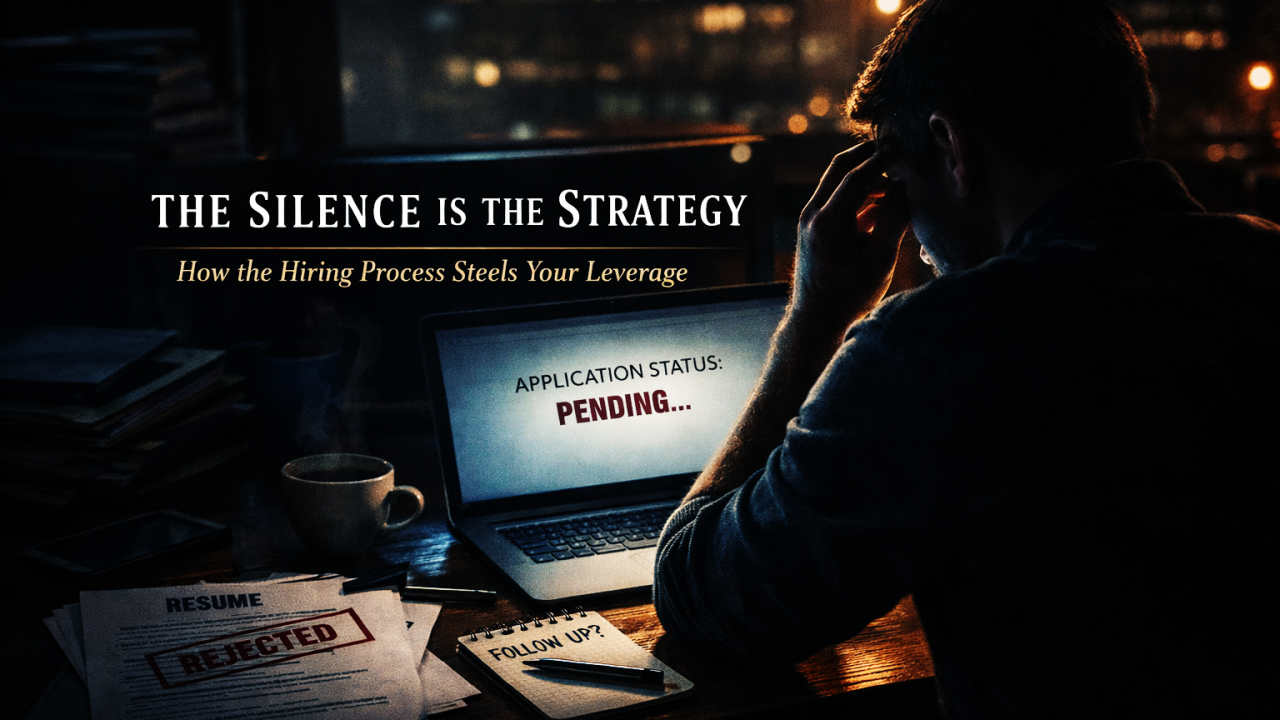
There is a set of rules everyone hands you when you start looking for a job: keep applying, build your resume, be patient, stay professional. None of it sounds wrong. Most of it even helps at first—not because it leads anywhere, but because it gives you motion. And when you're between roles, motion feels like survival.
But these rules were designed for a market that no longer exists. Following them blindly leads to a slow, almost invisible erosion of your professional worth and most people don't notice until the damage is already done.
The Illusion of Momentum
At the beginning of a search, you feel solid.
You update your resume. You apply to roles you're actually qualified for not stretch roles, not desperation roles, but real opportunities where you know you can deliver value. You feel measured. Capable.
Submitting an application feels like progress. You picture the interview, the conversation, the moment things start moving again. You imagine how you'd approach the role, what you'd fix first, how you'd add value on day one.
At this stage, you still believe the system works. You're holding up your end of the bargain. You assume the process will meet you halfway.
The Cognitive Drain
Then comes the waiting. This is the part nobody teaches you.
A few days is nothing. A week feels normal. Two weeks feels uncomfortable. Three weeks changes the tone of your entire life.
You start checking your inbox more often than you'd ever admit. You reread the job description, scanning for a hidden requirement you might have missed. You replay your submission in your head, wondering if a sentence landed wrong—if your experience sounded too confident or not confident enough.
You hesitate before applying to other roles because this one might still be alive, and you don't want to "mess things up" by juggling too many possibilities. You tell yourself you're being strategic.
From the outside, it looks like patience. From the inside, it's paralysis.
Waiting locks part of your attention in place. It keeps you mentally paused—half-ready, half-stalled. You don't move on, not because you can't, but because you don't want to close a door that might still open.
This is where the company gains its first advantage without saying a single word.
When It Turns Personal
Eventually, the process stops being external and starts becoming internal.
You stop thinking about the role. You start thinking about yourself.
You reread your resume—not because it's bad, but because changing something feels better than waiting. You scan for gaps that didn't bother you three weeks ago. You soften your language. You shrink accomplishments. You try to sound safer, more flexible, less threatening.
You're no longer presenting who you are. You're trying to anticipate what they want.
Nothing actually happened. No rejection. No feedback. Just time passing without information. And time without clarity has a way of turning inward, becoming a weapon you use against your own confidence.
After enough of these cycles, each application carries more weight than the last. You hype yourself up just enough to hit submit, then immediately brace for the silence you've been trained to expect. When the rejection finally comes or worse, when nothing comes at all it lands harder. Not because the job mattered more, but because you're already worn thin.
At some point, the internal math flips.
You stop thinking: I am a high-value asset they would be lucky to have.
You start thinking: I would be lucky to get this job.
That shift is quiet. But it changes everything. It changes your tone in interviews. It changes how you answer questions. It changes how you negotiate. It changes your posture. You're no longer evaluating whether the job fits you. You're hoping you fit the job.
How Leverage Disappears
Leverage isn't just experience or skill. It's the ability to walk away. It's how you talk about your work and what you're willing to tolerate.
As confidence erodes, leverage goes with it. You stop applying to roles you actually want and start applying to roles you think you're "allowed" to have. You accept slower timelines, worse communication, and lower pay—not because it's strategic, but because you no longer trust your own position in the market. They know this. They know waiting lowers confidence. They know silence creates leverage for the buyer. They know exhaustion makes people flexible on salary and title.
This isn't always malicious. Sometimes it's understaffed HR teams. Sometimes it's indecision. But the effect is the same.
This is how people who should be Senior Directors end up underpaid in mid-level roles. This is how capable people become grateful for opportunities that barely meet them halfway.
The company hasn't even made an offer yet—but they've already won the negotiation. The waiting did the work for them.
Reclaiming Control
The shift back doesn't look dramatic. There's no angry email. No ultimatum. No demand for closure.
It starts before you even apply.
You decide your own timeline. How long will you wait before you mentally move on? How much energy does this application get? What's the threshold where silence becomes your answer?
Then you hold that line.
Here's what that actually looks like: a role goes quiet for three weeks. The old version of you would rewrite your resume, re-check the portal, compose a follow-up email you agonize over for an hour. The version of you that protects their leverage does something different. You note the silence. You move the opportunity to the back of your mind. You apply to two more roles that afternoon. You don't rewrite anything. You don't spiral. You treat the silence as information—because it is.
If they come back later, fine. They can re-enter your orbit. But you are no longer orbiting them.
That's not bitterness. That's discipline. And discipline is the only thing the process can't take from you without your permission.
Where That Leaves You
The only way the market improves is if capable people stop absorbing this quietly.
Not by being louder. By being firmer.
You remember the fundamental truth of the transaction: you are not asking for a favor. You are offering value. You're not lucky to apply. You're qualified to choose.
If a company cannot meet you with clarity, respect, and a reasonable timeline, they failed the interview—not you.
And here's the part companies haven't accounted for yet: this only has to work in one direction for so long. Right now, they hold the leverage because people accept the silence. They accept the three-week black holes. They accept the disrespect baked into the process and still show up grateful for the opportunity. But the moment enough qualified people start walking away—declining offers from companies that wasted their time, pulling out of processes that drag on without communication, choosing competitors who treated them like professionals from day one—the math changes. Companies don't fix broken hiring processes out of goodness. They fix them when the talent they want stops showing up.
That shift doesn't require movement. It requires enough individuals deciding, quietly and firmly, that their time and their value are not negotiable.
The market may have changed. Your value hasn't.
Don't give up your footing just because the process is designed to make you feel off-balance. Protect it.